
Signals
Observations on trust, work and the systems changing underneath them.
We Keep Rebuilding What We Already Know
One thing has always fascinated me about organizations.
They learn.
They improve.
They gain experience.
Then, somehow…
They lose access to what they already discovered.
Not because the knowledge disappeared.
Because the context did.
A trusted employee leaves.
A customer changes.
A manager retires.
A project ends.
A company is acquired.
A team reorganizes.
The people change.
The relationships change.
And suddenly, questions that were answered years ago have to be answered all over again.
Organizations rarely lose information.
They lose continuity.
That's an expensive distinction.
Most businesses have more information than they've ever had.
More reports.
More dashboards.
More documentation.
More systems.
Yet every day, experienced people still hear questions like:
"Has anyone worked with them before?"
"Do we know anyone there?"
"Who handled this last time?"
"What happened the last time we tried this?"
The information may still exist somewhere.
But if no one can connect it to the present moment…
It might as well not exist at all.
That's why continuity has become one of the most overlooked assets in modern business.
Not because it eliminates change.
Because it allows learning to survive it.
Think about the strongest organizations you've encountered.
Their advantage isn't simply having talented people.
It's that each generation builds upon the one before it.
Knowledge compounds.
Relationships compound.
Experience compounds.
Progress compounds.
Not because nothing changes.
Because what was learned remains accessible.
The strongest organizations don't just preserve information.
They preserve understanding.
There's an important difference.
Information tells us what happened.
Understanding tells us why it mattered.
Understanding carries context.
It carries judgment.
It carries experience.
It carries trust.
Without that continuity, organizations spend enormous amounts of time recreating confidence they once had.
Rebuilding relationships they once earned.
Rediscovering lessons they once learned.
None of those efforts create new value.
They simply recover old value.
I've often wondered how much of modern work isn't actually creating progress…
It's recreating it.
Rebuilding trust.
Rebuilding credibility.
Rebuilding confidence.
Rebuilding understanding.
Not because people failed.
Because continuity failed.
That's a very different problem.
And it requires a very different way of thinking.
Instead of asking,
"How do we collect more information?"
Perhaps we should ask,
"How do we preserve what we've already learned?"
Because organizations don't become stronger by repeatedly starting over.
They become stronger when every new beginning begins a little farther ahead than the last one.
Progress isn't built by remembering everything.
It's built by forgetting less.
That may be one of the greatest opportunities facing modern organizations.
Not creating more knowledge.
Creating better continuity.
Because when understanding survives change…
Experience compounds.
Relationships deepen.
Confidence grows.
And every future decision begins with something the last one left behind.
Organizations don't become stronger because they avoid change.
They become stronger because what they've learned survives it.
Because every relationship shouldn't begin from zero.
Every introduction shouldn't begin from zero.
Every decision shouldn't begin from zero.
And every organization shouldn't begin from zero.
Every step should begin where the last one ended.
Every Unknown Has a Cost
Most organizations don't struggle because they lack information.
They struggle because they lack confidence.
Every meaningful decision begins with a question.
Should we hire this person?
Should we trust this partner?
Should we work with this carrier?
Should we promote this leader?
Should we expand this relationship?
Those questions are rarely answered with complete certainty.
Instead, organizations do what they've always done.
They gather more information.
More interviews.
More references.
More approvals.
More meetings.
More documentation.
Sometimes those steps are necessary.
Often they are.
But over three decades in business I've noticed something interesting.
The additional work isn't always solving the problem.
It's compensating for uncertainty.
Every unknown carries a cost.
The question is who ends up paying it.
Sometimes it's paid in time.
A hiring decision gets delayed.
A partnership takes longer to begin.
An opportunity disappears while people wait for more certainty.
Sometimes it's paid in money.
Another verification.
Another inspection.
Another review.
Another layer of process.
Sometimes it's paid in something much harder to measure.
Momentum.
Confidence.
Trust.
The willingness to move forward.
Most organizations become remarkably good at managing uncertainty.
They build processes around it.
Checklists.
Approvals.
Policies.
Safeguards.
None of those are inherently bad.
Many exist for very good reasons.
But I've often wondered whether we've become so accustomed to managing uncertainty that we've stopped asking why so much of it exists in the first place.
Uncertainty doesn't just slow decisions.
It changes them.
Think about the strongest leaders you've worked with.
They rarely possess perfect information.
Nobody does.
What they often possess is better context.
They recognize patterns more quickly.
They understand history more completely.
They see relationships others haven't noticed.
That additional understanding doesn't eliminate risk.
It changes the quality of the decision.
That's an important distinction.
The goal has never been certainty.
Business doesn't work that way.
The goal is making uncertainty smaller than it was yesterday.
Every piece of demonstrated history contributes to that.
Every consistent interaction.
Every fulfilled commitment.
Every relationship that reinforced trust.
Every observable pattern.
Not because any one moment guarantees the future.
Because together they create context.
Context changes confidence.
Confidence changes decisions.
That's one of the reasons I've become increasingly convinced that many of the costs organizations accept today aren't really operational costs.
They're uncertainty costs.
The extra interview.
The additional approval.
The second reference.
The repeated verification.
The duplicated effort.
Each exists because someone is trying to reduce the unknown.
Over time, those costs become invisible.
They're simply accepted as the way business works.
But what if the opportunity isn't eliminating those safeguards?
What if it's reducing the amount of uncertainty that makes them necessary?
That's a different conversation entirely.
It's not about replacing judgment.
It's about strengthening it.
Not replacing trust.
Supporting it.
Not removing risk.
Helping people understand it more clearly.
The strongest systems don't eliminate uncertainty.
They reduce it.
I believe that one of the greatest opportunities in modern business isn't collecting more information.
It's making demonstrated understanding easier to preserve.
Because every time uncertainty becomes smaller…
Decision-making becomes faster.
Relationships begin with greater confidence.
Opportunities move more quickly.
Organizations spend less energy rediscovering what was already true.
The unknown never disappears.
Nor should it.
Every new opportunity carries some degree of uncertainty.
That's part of business.
The goal isn't eliminating the unknown.
The goal is making sure we aren't recreating it unnecessarily.
Because every unknown has a cost.
And the organizations that learn how to reduce those costs don't simply become more efficient.
They become more confident.
Visibility Changes Behavior
One of the most interesting things I've observed throughout my career has very little to do with technology.
It has everything to do with human nature.
People pay attention to what gets noticed.
Not because they're chasing recognition.
Because recognition quietly communicates what matters.
Walk through almost any successful organization and you'll see it.
The people who consistently communicate well become examples for everyone else.
The teams that solve problems together become models others try to emulate.
The leaders who remain calm under pressure influence the culture around them without ever being asked to.
None of that requires a policy.
It happens because behavior is visible.
People naturally build toward the things an organization consistently recognizes.
Visibility doesn't create behavior.
It reinforces it.
That distinction matters.
Too often we assume better outcomes require new rules.
Or more oversight.
Or another layer of process.
Sometimes they do.
But many times the desired behavior already exists.
It simply isn't visible enough for others to learn from it.
The strongest organizations I've worked with rarely manufacture excellence.
They identify it.
Then they make it easier to recognize.
That recognition does something remarkable.
It tells everyone else,
"This is what good looks like."
Not through a handbook.
Through examples.
Think about how quickly people learn inside healthy teams.
Not because someone explains every expectation.
Because they observe consistent patterns.
How experienced people communicate.
How they prepare.
How they respond when things don't go according to plan.
Visibility becomes education.
Quietly.
Naturally.
Without anyone announcing that it's happening.
People build toward what they can consistently see.
The opposite is also true.
When professionalism remains invisible…
When reliability goes unnoticed…
When consistency disappears into the background…
Organizations unintentionally reward something else.
Not because they intended to.
Because people naturally pay attention to whatever receives attention.
That's one of the reasons culture is so difficult to define.
Culture isn't built by mission statements alone.
It's built by repeated examples.
Repeated observations.
Repeated demonstrations of what an organization truly values.
Visibility shapes those demonstrations.
Not by forcing behavior.
By reinforcing it.
Over time, something even more interesting begins to happen.
Recognition starts compounding.
People become known for solving problems.
For communicating well.
For helping others succeed.
For doing difficult things consistently.
Not because someone declared them exceptional.
Because their work repeatedly demonstrated it.
That's how reputations have always been built.
One interaction at a time.
One decision at a time.
One relationship at a time.
The difference is that today, many of those demonstrations disappear almost as quickly as they happen.
A project ends.
A customer changes.
A company changes.
A team changes.
The behavior occurred.
The visibility faded.
Which means the next person often must begin learning all over again.
I believe that one of the greatest opportunities in modern organizations isn't creating better behavior.
It's preserving visibility into the behavior that already exists.
When professionalism becomes easier to recognize…
When consistency becomes easier to observe…
When demonstrated performance becomes easier to understand…
People don't suddenly become different.
They become easier to learn from.
Recognition isn't the reward.
Recognition is the infrastructure.
That idea has stayed with me for years.
Because the organizations that improve the fastest aren't always the ones with the smartest people.
They're often the ones where good work becomes visible enough for others to build upon.
That's how trust spreads.
That's how culture strengthens.
That's how better decisions quietly become more common.
Not because people changed.
Because visibility did.
And sometimes…
Changing what people can see changes everything else.
The Best Introductions Shouldn't Start From Zero
I've been introduced to thousands of people throughout my career.
Drivers.
Recruiters.
Operations leaders.
Safety professionals.
Salespeople.
Executives.
Customers.
Partners.
Every introduction begins the same way.
A handshake.
A conversation.
An introduction.
Then, almost immediately, something interesting happens.
We start asking questions.
Where have you worked?
What have you done?
Who do you know?
What kind of experience do you have?
Can anyone vouch for you?
None of those questions are unreasonable.
In fact, they're often necessary.
Every meaningful relationship begins with understanding.
But over the years, I've found myself wondering why those conversations almost always begin so close to zero.
The best introductions shouldn't begin with claims.
They should begin with context.
Think about the people you've worked alongside for years.
You don't trust them because of what they tell you.
You trust them because of what you've observed.
You've seen how they communicate.
You've seen how they respond under pressure.
You've seen how they treat customers.
You've seen how they solve problems.
You've seen them earn confidence over time.
That's what creates trust.
Not introductions.
Experience.
Now imagine meeting that same person for the first time.
None of that history is immediately visible.
The person hasn't changed.
Only your visibility into their history has.
So naturally, the conversation begins differently.
Questions replace understanding.
Verification replaces familiarity.
Time replaces continuity.
Eventually, trust is rebuilt.
But rebuilding isn't the same as preserving.
That's a distinction I've come to appreciate more every year.
Recognition is far more valuable than rediscovery.
The strongest professional relationships don't begin with blind trust.
They begin with informed trust.
There's a difference.
Blind trust ignores evidence.
Informed trust begins because evidence already exists.
That's true whether you're hiring someone.
Selecting a carrier.
Choosing a business partner.
Building a leadership team.
Or simply deciding who deserves greater responsibility.
Every meaningful decision benefits from context.
Yet so much of professional life still depends on introducing ourselves as though yesterday never happened.
A résumé helps.
A reference helps.
An interview helps.
But they're all attempts to reconstruct something that already exists.
Professional history.
Professional character.
Professional consistency.
The work has already been done.
The challenge is making it visible.
That's why I believe the future of professional relationships won't be defined by better introductions.
It will be defined by better continuity.
The ability to begin conversations with more understanding than we have today.
Not because questions disappear.
Because better context already exists.
Imagine meeting someone new while already understanding the patterns they've consistently demonstrated.
Not the details of every project.
Not private information.
Simply the accumulated evidence that they've earned trust over time.
The conversation changes.
Not because judgment disappears.
Because the starting point improves.
Recognition should accelerate understanding.
Not replace it.
One of the most overlooked costs in business is the time we spend rediscovering people.
Rediscovering capability.
Rediscovering reliability.
Rediscovering professionalism.
Rediscovering what someone has already spent years demonstrating.
That work creates friction.
It delays decisions.
It increases uncertainty.
And often, it prevents opportunities from beginning where they otherwise could have.
Introductions shouldn't erase history.
They should reveal it.
Not every detail.
Not every accomplishment.
But enough context to begin relationships with greater understanding than we have today.
Because every meaningful relationship eventually reaches a point where introductions no longer matter.
Only demonstrated behavior does.
The opportunity isn't eliminating introductions.
It's making them far more informed than they've ever been before.
Because when understanding begins earlier, trust doesn't have to start from zero.
The strongest relationships aren't built faster.
They simply begin with more context.
Trust Was Never Meant to Belong to a Company
I've worked with many remarkable people.
Drivers.
Recruiters.
Dispatchers.
Safety professionals.
Salespeople.
Operations leaders.
Executives.
People whose reputations weren't built by what they said.
They were built by what they consistently did.
Over time, everyone around them learned something important.
Who followed through.
Who communicated well.
Who remained calm under pressure.
Who solved problems instead of creating them.
Who could be counted on when things became difficult.
None of that happened overnight.
It accumulated.
One decision at a time.
One interaction at a time.
One relationship at a time.
That's how trust has always worked.
But somewhere along the way, something interesting happened.
Much of that hard-earned professional history became trapped inside the organizations where it was earned.
When someone moved...
Much of the context stayed behind.
Not intentionally.
Simply because that's how our systems evolved.
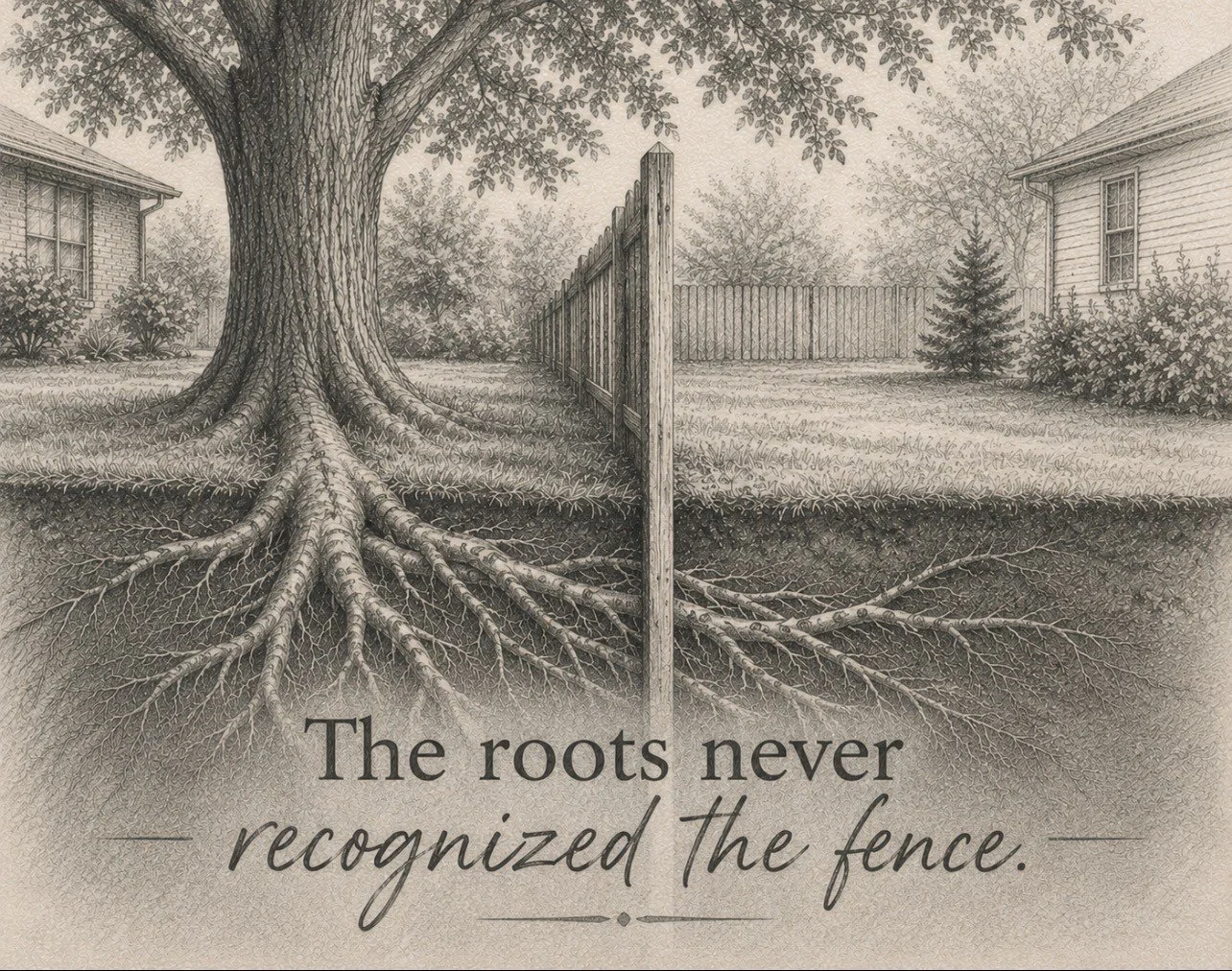
Trust belongs to people.
Not the companies they happen to work for.
Think about that for a moment.
A person may spend ten years earning the confidence of customers.
Helping teammates.
Making difficult decisions.
Building an outstanding reputation.
Then they change organizations.
The experience moves.
The knowledge moves.
The judgment moves.
The character moves.
But much of the evidence that demonstrates those things doesn't.
The organization remembers.
The market often doesn't.
So the individual begins introducing themselves all over again.
Not because they've become someone different.
Because the context became disconnected.
That has always struck me as strange.
Imagine if your education worked that way.
Imagine earning a college degree that disappeared every time you accepted a new job.
Or professional certifications that remained with your previous employer instead of remaining with you.
We'd immediately recognize how unreasonable that would feel.
Yet we often accept something remarkably similar when it comes to professional trust.
People change companies.
Their demonstrated character doesn't.
This isn't really about ownership.
It's about continuity.
Organizations absolutely create culture.
They develop talent.
They invest in people.
Those investments matter.
They should.
But demonstrated professionalism doesn't suddenly become less real because someone accepted a new opportunity.
If anything, those demonstrations become more valuable.
Because they've now been observed in different environments.
Under different leaders.
With different customers.
Across different challenges.
Consistency becomes easier to recognize when it survives change.
That's why I believe trust has always been larger than any single organization.
Companies experience it.
Relationships reinforce it.
But people earn it.
One of the most fascinating aspects of business is that the things we value most are often the things we struggle to preserve.
Knowledge.
Experience.
Relationships.
Context.
Trust.
Every transition risks leaving part of those assets behind.
Not because anyone wants that outcome.
Because our systems were never designed to let them travel.
The result is a tremendous amount of unnecessary rebuilding.
New introductions.
New verification.
New uncertainty.
New efforts to prove what was already demonstrated somewhere else.
That work has become so common that many organizations simply assume it's unavoidable.
I'm not convinced it is.
Professional trust should outlive professional transitions.
That doesn't mean trust should become automatic.
Or unquestioned.
Or permanent.
Trust should always continue being earned.
Every day.
In every role.
With every new opportunity.
But continuing to earn trust is very different from repeatedly recreating it from nothing.
One reflects growth.
The other reflects fragmentation.
I'm convinced that industries don't simply need better ways to evaluate people.
They need better ways to preserve what people have already demonstrated.
Because when demonstrated trust can continue across careers instead of restarting with every transition, something powerful begins to happen.
Organizations spend less time rediscovering.
People spend less time reintroducing themselves.
And decisions begin with more understanding than they did before.
Not because standards became lower.
Because continuity became stronger.
The future won't belong to organizations that own trust.
It will belong to organizations that help trust move.
Because trust was never meant to stay in one place.
It was always meant to travel with the people who earned it.

Your Best Work Shouldn't Stay Behind
Throughout our careers, we build far more than résumés.
We build relationships.
We build credibility.
We build confidence.
We build trust.
We build a reputation that isn't defined by a single accomplishment, but by hundreds of ordinary moments that most people never see.
Showing up on time.
Following through.
Helping a teammate.
Solving a difficult problem.
Communicating well under pressure.
Doing the right thing when no one is watching.
None of those moments make headlines.
Most aren't even documented.
Yet over time, they become the foundation of how people come to know us.
That's what a professional reputation really is.
Not a list of accomplishments.
A history of demonstrated behavior.
The most valuable things we build are often the hardest things to carry with us.
Think about what happens when someone changes organizations.
They don't leave behind their knowledge.
They don't leave behind their character.
They don't leave behind their work ethic.
But much of the evidence that demonstrates those things becomes harder for others to see.
The relationships remain.
The context often doesn't.
So the process begins again.
A new employer starts learning who they are.
A new customer starts building confidence.
A new team begins establishing trust.
None of that is unusual.
It's simply how most organizations operate today.
But the more I've thought about it over the years, the more I've questioned whether it has to be that way.
Why should demonstrated professionalism become less visible simply because someone changes companies?
Why should years of consistency become more difficult to recognize because someone crossed an organizational boundary?
Those aren't questions about technology.
They're questions about continuity.
The work still exists.
The history still exists.
The experience still exists.
Only the visibility changes.
Changing organizations shouldn't mean starting over.
One of the most overlooked costs in business isn't replacing people.
It's rebuilding understanding.
Every new relationship begins with uncertainty.
Every new partnership begins with questions.
Every new hire begins with verification.
That's understandable.
Trust should never be automatic.
But there's an important difference between earning trust and repeatedly recreating evidence that trust has already been earned.
The strongest organizations recognize this instinctively.
They look for consistency.
Not perfection.
Patterns.
Not isolated events.
Demonstrated behavior over time.
Because behavior tells a story that documents alone rarely capture.
That's true whether you're hiring someone.
Choosing a business partner.
Evaluating a leader.
Or deciding who should be trusted with greater responsibility.
History matters.
Not because the past guarantees the future.
Because it provides context for interpreting the present.
Without that context, every relationship begins closer to zero than it should.
The result isn't simply more work.
It's slower decisions.
Longer onboarding.
More verification.
More uncertainty.
And uncertainty has a cost.
Not just financially.
Operationally.
Relationally.
Strategically.
Imagine if every meaningful professional contribution you've made remained visible, not as self-promotion, but as accumulated context.
Not replacing judgment.
Supporting it.
Not eliminating questions.
Improving the quality of the answers.
That's a very different way of thinking about professional identity.
It shifts the conversation from:
"What can you tell me about yourself?"
to:
"What has your work already demonstrated?"
That's where meaningful trust begins.
Not with claims.
With evidence.
Not with impressions.
With patterns.
Not with isolated moments.
With continuity.
The future of professional trust isn't about remembering more.
It's about forgetting less.
The longer I've worked in business (transportation), the more convinced I've become that people shouldn't have to repeatedly prove what they've already proven.
Not because standards should become lower.
Because demonstrated performance should become easier to recognize.
The work has already been done.
The opportunity is making sure it doesn't get left behind.

The Best Systems Make Trust Easier
For much of my career, I've watched organizations invest enormous amounts of time trying to answer the same fundamental question.
Can we trust this person?
It sounds simple.
In practice, it rarely is.
Every organization develops its own methods.
Applications.
Interviews.
Reference checks.
Performance reviews.
Safety records.
Compliance files.
Background checks.
Conversations.
Instinct.
Experience.
None of those things are wrong.
In fact, many of them are necessary.
But over the years I've found myself asking a different question.
What if the real challenge isn't building trust?
What if it's making trust easier to recognize?
The best systems don't create trust.
They make trust easier to see.
That's an important distinction.
Trust isn't something software manufactures.
It isn't something a policy can require.
And it certainly isn't something a dashboard can invent.
Trust is earned.
Always has been.
Always will be.
People earn it through consistency.
Through reliability.
Through communication.
Through following through when they said they would.
Through doing the right thing when no one is watching.
Technology doesn't create any of those behaviors.
People do.
The opportunity isn't changing human behavior.
The opportunity is to make those behaviors more visible.
Think about how often organizations ask someone to prove something they've already proven somewhere else.
A driver changes companies.
A recruiter starts over.
A manager joins a new organization.
A carrier begins working with a new customer.
The work that built trust may already exist.
The context often doesn't.
So the process begins again.
Not because the person became less trustworthy.
Because the visibility disappeared.
That creates friction.
More interviews.
More verification.
More uncertainty.
More time spent rebuilding confidence that may have already been earned.
Eventually, those extra steps begin feeling normal.
But normal doesn't always mean necessary.
The cost isn't earning trust.
The cost is earning it again.
The strongest systems I've witnessed throughout my professional career have something in common.
They don't replace judgment.
They improve it.
They don't tell people what to think.
They help people see more clearly.
That's true in transportation.
It's true in healthcare.
It's true in finance.
It's true almost everywhere.
When reliable context becomes easier to recognize, decision-making improves naturally.
Not because people stop thinking.
Because they spend less time searching for information they should already have.
That's one of the most overlooked costs in business.
The cost of rediscovering.
Rediscovering history.
Rediscovering relationships.
Rediscovering performance.
Rediscovering patterns.
Every time that happens, organizations pay for information that already exists.
Not because the information disappeared.
Because the visibility did.
Imagine if every time you changed employers, your education disappeared.
Your professional licenses disappeared.
Your work history disappeared.
Every accomplishment.
Every recommendation.
Every project.
You'd spend years rebuilding something that was already true.
Most people would immediately recognize how inefficient that would be.
Yet many industries quietly do versions of that every day.
Not intentionally.
Simply because that's how systems evolved.
The longer I've worked in transportation, the more convinced I've become that the next generation of infrastructure won't simply help organizations collect more information.
It will help them preserve more understanding.
That's a very different objective.
Information accumulates.
Understanding compounds.
When organizations recognize demonstrated performance instead of repeatedly recreating it, something interesting begins to happen.
Decision-making accelerates.
Uncertainty decreases.
Relationships begin with more context than they did before.
Not because standards become lower.
Because visibility becomes higher.
Better systems don't replace trust.
They reduce the work required to recognize it.
That's the opportunity.
Not building trust.
People have always done that remarkably well.
The opportunity is ensuring that trust doesn't disappear every time people, companies, or opportunities change.
Because when earned trust becomes easier to recognize, better decisions become easier to make.
And that's the kind of infrastructure that quietly makes every other system more valuable.

Better Decisions Start Before the Decision
Every important decision has something in common.
It begins long before anyone realizes a decision is being made.
Think about hiring.
Most people picture the decision happening when someone reviews an application, conducts an interview, checks references, and finally decides whether to extend an offer.
But the real decision started much earlier.
It started months, or even years, before that application ever arrived.
It started every time the individual showed up on time.
Every time they communicated well.
Every time they solved a problem instead of creating one.
Every time they followed through when no one was watching.
Those moments weren't hiring decisions.
They were the moments that eventually made the hiring decision easier.
The same pattern appears almost everywhere.
A customer decides whether to renew a contract.
A broker decides whether to trust a carrier.
A shipper decides who belongs in its network.
An operations manager decides who should lead the next project.
By the time those decisions arrive, much of the outcome has already been quietly shaped by hundreds of smaller moments that came before.
That's what makes trust so interesting.
Trust isn't usually created during the decision.
It's accumulated before the decision ever exists.
The challenge is that many of those moments become surprisingly difficult to see.
Organizations collect applications.
They store documents.
They record transactions.
They preserve compliance records.
Those things matter.
But they often represent snapshots rather than continuity.
A snapshot tells us what existed at one moment in time.
Continuity helps us understand what has been happening all along.
The distinction matters more than it first appears.
Imagine meeting someone for the first time.
A résumé tells you where they've worked.
A reference tells you what someone remembers.
An interview tells you how they present themselves today.
Each provides useful information.
None necessarily reveals the pattern that produced those outcomes.
Patterns are different.
Patterns emerge slowly.
They're built from repeated decisions.
Repeated behaviors.
Repeated demonstrations of professionalism, reliability, and consistency.
Over time, those patterns become easier to recognize.
And when they're visible, decisions begin changing naturally.
Not because judgment disappears.
Because judgment begins with better context.
Experienced leaders already understand this instinctively.
The best recruiters rarely hire based on a résumé alone.
The best operators rarely judge performance from a single event.
The best investors rarely evaluate a company from one quarter.
They all search for something deeper.
They search for patterns.
Patterns reduce uncertainty.
Patterns reveal consistency.
Patterns help separate isolated events from underlying behavior.
That's one of the reasons history matters.
Not because the past guarantees the future.
Nothing does.
History matters because it provides context for interpreting the present.
Without context, every important decision begins closer to zero than it should.
Organizations compensate for that uncertainty in predictable ways.
They ask more questions.
They create more approval steps.
They add another interview.
Another verification.
Another layer of process.
Many of those steps are valuable.
Some exist because the underlying signal was never visible in the first place.
Over time, those workarounds become normal.
People stop asking why they're necessary.
But what if better decisions didn't require more process?
What if they simply required better continuity?
The strongest organizations aren't necessarily the ones with the most information.
They're often the ones that understand which information deserves the most attention.
The strongest leaders don't eliminate uncertainty.
They reduce it.
The strongest systems don't eliminate judgment.
They strengthen it.
And that usually begins long before the decision itself.
Because every decision eventually depends on something that happened earlier.
Every partnership.
Every hire.
Every promotion.
Every opportunity.
By the time those moments arrive, much of what matters has already been quietly earned.
The real opportunity isn't improving the decision itself.
It's preserving the history that makes better decisions possible.
Because better decisions rarely begin at the moment they're made.
They begin with everything that came before.

The Hardest Problems Hide in Plain Sight
I've been fascinated by a particular type of problem for most of my life.
Not the obvious problems.
Not the urgent problems.
Not even the expensive problems.
The problems that seem normal.
The problems people stop questioning.
The problems that become so familiar that nobody notices them anymore.
Those are often the most interesting.
And sometimes, the most important.
Because familiarity has a strange effect on human behavior.
The longer something exists, the more likely we are to accept it as inevitable.
Not because it makes sense.
Because it has always been there.
The hardest problems are often the ones everyone has learned to live with.
Think about how many times you've heard phrases like:
"That's just how the industry works."
"That's part of the business."
"That's the cost of doing business."
Most of the time, those statements aren't intended to be dismissive.
They're intended to be practical.
People learn how to operate within the realities they inherit.
They adapt.
They compensate.
They build processes around the limitations they encounter.
Eventually those limitations stop feeling unusual.
They become normal.
That's where things get interesting.
Because normal and necessary are not the same thing.
Yet we often treat them as though they are.
The longer a problem exists, the more likely people are to mistake adaptation for resolution.
The fact that we've learned to work around something doesn't mean the problem disappeared.
It simply means we've become skilled at managing its consequences.
Adaptation is not the same thing as solving.
Transportation provides examples of this everywhere.
People spend time rebuilding trust.
Rebuilding context.
Rebuilding relationships.
Rebuilding confidence.
Again and again.
Most don't question it.
It's simply accepted as part of the process.
Someone changes companies.
Trust resets.
Someone changes roles.
Context resets.
Someone enters a new network.
Visibility resets.
Most industries have similar examples.
The behavior becomes so common that people stop viewing it as a problem.
Instead, they view it as reality.
The challenge is that reality often contains inefficiencies hiding in plain sight.
Not because nobody cares.
Because everybody adapted.
That's one of the reasons truly transformative ideas often appear obvious in hindsight.
Once someone solves the problem, people look back and say:
"Of course."
"That makes sense."
"Why didn't someone do that sooner?"
The answer is usually simple.
Because the problem became invisible.
Not invisible because it wasn't there.
Invisible because it had become normal.
People rarely question what they experience every day.
The most enduring inefficiencies often share that characteristic.
They're woven into routines.
Processes.
Expectations.
Assumptions.
People build businesses around them.
Technologies around them.
Entire industries around them.
Over time, the workarounds become more visible than the original problem itself.
That's where opportunity tends to emerge.
Not from inventing something entirely new.
From recognizing something old that everybody else stopped noticing.
The longer I've worked in transportation, the more I've become convinced that many of the industry's most important challenges fall into this category.
Not because they're hidden.
Because they're familiar.
Everyone experiences them.
Everyone adapts to them.
Everyone compensates for them.
Few stop to ask whether they should exist at all.
That's a different question.
And often a more valuable one.
Because progress rarely begins with answers.
It begins with curiosity.
The willingness to look at something ordinary and ask:
Why?
Why does it work this way?
Why do we accept this?
Why do we keep rebuilding what already exists?
Why do we continue recreating context that was previously earned?
Why do trusted signals disappear when people move?
Why does understanding reset so often?
Those questions aren't always comfortable.
But they're often where meaningful change begins.
Sometimes the biggest opportunity isn't creating something new.
It's questioning something old.
The future won't belong solely to organizations that solve visible problems.
Many visible problems already attract attention.
The future belongs to organizations that identify problems hiding beneath familiarity.
Problems disguised as assumptions.
Problems disguised as routines.
Problems disguised as normal.
Because once a problem becomes visible again, possibilities begin to emerge.
Alternatives begin to emerge.
Better approaches begin to emerge.
And what once seemed inevitable begins to look surprisingly temporary.
The longer I've worked in this industry, the more convinced I've become that some of the most valuable opportunities aren't hidden at all.
They're sitting in plain sight.
Waiting for someone to notice them again.
The hardest problems aren't always difficult to see.
Sometimes they're simply too familiar to question.
Confidence Is Not the Same Thing as Certainty
For all of my career, I've worked around people who were expected to make decisions.
Not simple decisions.
Important decisions.
The kind of decisions where outcomes matter.
Hiring decisions.
Safety decisions.
Operational decisions.
Customer decisions.
Investment decisions.
Partnership decisions.
And one thing I've noticed over the years is that many people confuse confidence with certainty.
At first glance, that seems reasonable.
The two feel similar.
Both involve conviction.
Both involve moving forward.
Both involve making a choice.
But they're actually very different.
And understanding the difference matters.
Because certainty is rare.
Confidence is essential.
Confidence and certainty are not the same thing.
Most meaningful decisions are made before certainty exists.
In fact, that's what makes them decisions.
If every outcome were known in advance, decision-making wouldn't be necessary.
The future would already be visible.
But that's not how business works.
Or life.
Or transportation.
Or leadership.
Every important decision contains uncertainty.
The question is never:
"Do we know everything?"
The question is:
"Do we understand enough?"
That's where confidence enters the picture.
Not as a replacement for uncertainty.
As a response to it.
The best operators I've known were rarely certain.
But they were often confident.
Confident because they understood the situation.
Confident because they recognized patterns.
Confident because they possessed context that others didn't.
Not certainty.
Understanding.
The goal isn't knowing everything.
The goal is understanding enough to move forward.
That's an important distinction.
Because many organizations spend enormous amounts of time pursuing certainty.
More reports.
More reviews.
More approvals.
More meetings.
More analysis.
Again, none of those things are inherently bad.
The challenge is that certainty remains elusive.
No amount of process can eliminate uncertainty entirely.
At some point, a decision still has to be made.
A hire still has to be made.
A carrier still has to be selected.
A partner still has to be trusted.
An opportunity still has to be pursued.
And when that moment arrives, people aren't relying on certainty.
They're relying on confidence.
The confidence that comes from understanding what they're looking at.
That's why context matters.
Context doesn't create certainty.
It creates understanding.
And understanding creates confidence.
Confidence grows when context improves.
Think about the strongest relationships in business.
The strongest partnerships.
The strongest teams.
The strongest organizations.
They don't operate with perfect certainty.
Nobody does.
What they possess is something else.
Shared understanding.
Accumulated experience.
Demonstrated behavior.
Patterns observed over time.
In other words, context.
The more context available, the easier it becomes to interpret signals correctly.
The easier it becomes to distinguish meaningful information from noise.
The easier it becomes to recognize risk.
And the easier it becomes to move forward with confidence.
Not because uncertainty disappeared.
Because understanding improved.
That's an important difference.
One changes reality.
The other changes perception.
Most organizations don't need perfect information.
They need better interpretation.
And better interpretation almost always comes from context.
Not more data.
Not more dashboards.
Not more reports.
Context.
Because context helps people understand what information means.
And meaning is what ultimately drives decisions.
Confidence is built through understanding, not certainty.
The transportation industry provides examples of this every day.
Experienced recruiters.
Experienced safety professionals.
Experienced operators.
Experienced leaders.
They often make decisions faster than less experienced people.
Not because they're reckless.
Not because they ignore risk.
Because they've learned how to interpret signals.
They've developed pattern recognition.
They understand what matters.
And what doesn't.
They're not eliminating uncertainty.
They're navigating it.
That's what confidence really is.
The ability to move forward despite incomplete information.
The ability to act without perfect certainty.
The ability to make decisions while uncertainty still exists.
Every successful organization does this.
Every successful leader does this.
Every successful operator does this.
Not because they have all the answers.
Because they understand enough to proceed.
The future won't belong to organizations that eliminate uncertainty.
That future doesn't exist.
The future belongs to organizations that improve understanding.
Organizations that provide better context.
Better visibility.
Better interpretation.
Because once understanding improves, confidence improves.
And when confidence improves, decisions improve.
Not because certainty arrived.
Because understanding did.
The best decisions aren't made when uncertainty disappears.
They're made when understanding becomes strong enough to move forward.
Better Decisions Start Earlier
For most of my career, I've been surrounded by people whose job was to make decisions.
Not perfect decisions.
Important decisions.
Hiring decisions.
Safety decisions.
Operational decisions.
Partnership decisions.
Investment decisions.
Customer decisions.
Every day, people throughout transportation make decisions that influence cost, performance, risk, and opportunity.
And one thing I've noticed over the years is that most discussions about decision-making focus on the moment the decision gets made.
Should we hire this person?
Should we work with this company?
Should we approve this opportunity?
Should we move forward?
Those questions matter.
But the longer I've worked in transportation, the more convinced I've become that the quality of a decision is often determined long before the decision itself.
Most decisions don't fail at the point of choice.
They fail at the point of understanding.
That's an important distinction.
When a decision produces a poor outcome, people often focus on the outcome itself.
The hire.
The accident.
The claim.
The missed opportunity.
The failed partnership.
The loss.
The assumption is that something went wrong during the decision-making process.
Sometimes that's true.
But often the decision-maker was working with an incomplete picture from the beginning.
The issue wasn't judgment.
The issue was visibility.
Because every decision is limited by what the decision-maker can actually see.
The more context available, the better the interpretation.
The better the interpretation, the better the decision.
That's why experienced operators are so valuable.
Not because they possess perfect judgment.
Because they've learned what to look for.
They've seen enough patterns to recognize signals that others miss.
They understand which details matter.
Which details don't.
Which questions deserve attention.
And which answers deserve skepticism.
The strongest decision-makers are often the strongest pattern recognizers.
They're not seeing different reality. They're seeing more of it.
That's something I've observed repeatedly throughout my career.
The best recruiters don't simply evaluate candidates.
They recognize patterns.
The best safety leaders don't simply review incidents.
They recognize patterns.
The best operators don't simply solve problems.
They recognize patterns.
And once you begin looking closely, you realize that many of the most important decisions are actually exercises in pattern recognition.
You're trying to determine what something means.
Not simply what happened.
A resume tells you what happened.
A pattern helps explain what it means.
A score tells you what happened.
A pattern helps explain what it means.
A report tells you what happened.
A pattern helps explain what it means.
That's where context becomes valuable.
Not because context guarantees outcomes.
Because context improves interpretation.
And interpretation is where decision quality begins.
Better decisions are often the result of better visibility.
Not better intelligence.
Not better technology.
Better visibility.
The ability to see enough of the picture to understand what you're evaluating.
The challenge is that many of the most important signals remain fragmented.
Scattered across systems.
Organizations.
Experiences.
Departments.
Relationships.
The information often exists.
The context often exists.
The challenge is connecting it.
Because disconnected information creates uncertainty.
Connected information creates understanding.
And understanding changes decisions.
Not every decision.
But enough of them to matter.
The transportation industry provides examples every day.
A carrier's history.
A driver's experience.
A recruiter's observations.
A customer's feedback.
A safety manager's concerns.
Individually, each signal may seem small.
Collectively, they often tell a story.
The challenge is that stories become harder to recognize when the signals remain disconnected.
Understanding improves when context stays connected.
That's one of the reasons visibility matters so much.
Not because visibility eliminates uncertainty.
It doesn't.
Every meaningful decision will always involve uncertainty.
The goal isn't certainty.
The goal is understanding.
Enough understanding to move forward with confidence.
Enough understanding to identify meaningful patterns.
Enough understanding to distinguish signal from noise.
The longer I've worked in transportation, the more convinced I've become that the future belongs to organizations that improve understanding before decisions are made.
Not after.
Before.
Organizations that help people see more clearly.
Recognize patterns sooner.
Connect context more effectively.
And identify trusted signals that might otherwise remain hidden.
Because once understanding improves, decision quality tends to improve as well.
Not perfectly.
Not universally.
But consistently.
And consistency compounds.
Better decisions rarely start at the moment of decision.
They start much earlier.
They start with visibility.
They start with context.
They start with understanding.
And the organizations that improve those things will ultimately outperform the organizations that don't.
Not because they avoid every mistake.
Because they see more before they decide.

Understanding Risk Is Different Than Managing It
The strongest operators aren’t always better at reacting. They’re often better at seeing.
For most of my career, I've worked around people whose job was to manage risk.
Safety leaders.
Operations teams.
Recruiters.
Brokers.
Shippers.
Executives.
Business owners.
Different titles.
Different responsibilities.
Different objectives.
But underneath it all, they were trying to solve the same problem.
They were trying to make decisions with an incomplete picture.
And over time, I've come to believe that's where many conversations about risk begin to go sideways.
Because understanding risk and managing risk are not the same thing.
Most organizations spend enormous amounts of time managing risk.
Policies.
Procedures.
Checklists.
Approvals.
Audits.
Training.
Oversight.
And for good reason.
Risk matters.
A lot.
But while managing risk gets most of the attention, understanding risk is often what determines whether those efforts succeed.
Managing risk and understanding risk are not the same thing.
Managing risk tends to focus on outcomes.
How do we prevent a claim?
How do we prevent an accident?
How do we prevent a bad hire?
How do we prevent a poor decision?
Those are important questions.
But understanding risk asks something different.
What patterns tend to exist before those outcomes occur?
What signals are we missing?
What do the strongest operators consistently recognize before everyone else does?
That's a different lens.
And in my experience, it's often the more valuable one.
The best safety professionals I've worked with weren't simply good at responding.
They were good at seeing.
The best recruiters weren't simply good at filling seats.
They were good at recognizing patterns.
The best operators weren't simply good at solving problems.
They were good at identifying them before they became problems.
Not because they had access to perfect information.
Because they had context.
They understood what they were looking at.
The strongest operators aren't always better at reacting.
They're often better at seeing.
That's one of the reasons experience matters.
Experience doesn't eliminate uncertainty.
It improves interpretation.
It helps people distinguish meaningful signals from background noise.
It helps people recognize patterns that others miss.
And those patterns are often where risk first becomes visible.
The challenge is that many organizations still rely heavily on snapshots.
A score.
A report.
A credential.
A checklist.
A moment in time.
All useful.
None complete.
Because risk rarely reveals itself in isolated moments.
It reveals itself in patterns.
Repeated decisions.
Repeated behaviors.
Repeated outcomes.
Viewed over time.
That's where understanding begins.
Not with a single event.
With accumulated context.
The transportation industry provides examples of this every day.
A carrier can meet every requirement on paper and still create concern.
A driver can have acceptable metrics and still raise questions.
A business partner can pass every formal check and still feel uncertain.
Why?
Because experienced operators are often seeing something beyond the checklist.
They're seeing context.
Patterns.
History.
Consistency.
Or the absence of it.
That's not intuition.
At least not entirely.
It's accumulated pattern recognition.
And pattern recognition is one of the most valuable forms of risk understanding that exists.
The challenge is that many of those patterns remain difficult to see.
They're scattered across systems.
Organizations.
Experiences.
Individual relationships.
Visible to some.
Invisible to others.
As industries become larger, more connected, and increasingly dependent on decisions involving people who have never worked together before, that visibility gap becomes more expensive.
Not because risk increased.
Because understanding became harder.
Risk doesn't become dangerous when it exists.
Risk becomes dangerous when it isn't understood.
That's an important distinction.
Because uncertainty will always exist.
No system will eliminate it.
No process will eliminate it.
No technology will eliminate it.
The goal isn't perfect certainty.
The goal is better understanding.
The goal is recognizing patterns earlier.
Recognizing context more clearly.
Recognizing demonstrated behavior before it becomes an outcome.
That's where better decisions begin.
Not after risk appears.
Before.
The longer I've worked in transportation, the more convinced I've become that the future won't belong to organizations that simply manage risk better.
Many already do that exceptionally well.
The future belongs to organizations that understand risk better.
Organizations that can see more clearly.
Recognize patterns sooner.
Identify trusted signals faster.
And provide decision-makers with context that would otherwise remain hidden.
Because once understanding improves, everything built on top of it improves.
Safety improves.
Hiring improves.
Partner selection improves.
Operations improve.
Insurance outcomes improve.
Decision-making improves.
Not because risk disappeared.
Because visibility did.
And visibility changes everything.
To me, that's one of the most important distinctions in business.
Managing risk is necessary.
Understanding risk is transformative.
The organizations that learn the difference will have an advantage that compounds for years.
The Value Already Exists
The challenge isn't creating value. It's recognizing it.
I've worked alongside lots of talented people who create tremendous value every day.
Drivers.
Dispatchers.
Operations professionals.
Recruiters.
Safety leaders.
Salespeople.
Managers.
People solving problems.
Making decisions.
Handling challenges.
Keeping businesses moving.
And one thing I've noticed over the years is that much of the value they create never gets fully recognized.
Not because it isn't important.
Because it's difficult to see.
A good decision made under pressure.
A problem prevented before it became a problem.
A conversation that avoided a service failure.
A judgment call that protected a customer relationship.
A professional who consistently does things the right way.
Those moments create value.
Real value.
But they rarely appear on a report.
They rarely show up in a dashboard.
And they rarely receive the attention they deserve.
Some of the most valuable work being done today is already happening.
We simply struggle to recognize it.
That's an interesting problem.
Because most discussions about productivity focus on creating more value.
More output.
More efficiency.
More growth.
More performance.
And all of those things matter.
But what if part of the opportunity isn't creating new value?
What if part of the opportunity is seeing value that already exists?
The longer I've worked in transportation, the more convinced I've become that every organization contains hidden value.
Not hidden because people are concealing it.
Hidden because many of the signals remain fragmented.
The work happened.
The contribution happened.
The professionalism happened.
The consistency happened.
The signal simply didn't travel very far.
As a result, people often get evaluated using only a fraction of the picture.
Organizations make decisions using incomplete context.
And opportunities are sometimes assigned without fully understanding where value is actually being created.
Not intentionally.
Because visibility has limits.
What isn't visible is difficult to recognize.
What isn't recognized is difficult to reward.
That's one of the reasons context matters so much.
Context doesn't create value.
It reveals value.
It helps explain what happened.
Why it happened.
Who contributed.
What patterns exist beneath the surface.
Without context, much of the most important work blends into the background.
It becomes difficult to distinguish exceptional performance from average performance.
Difficult to understand consistency.
Difficult to recognize professionalism.
Difficult to identify the people quietly creating value every day.
And when that happens, something else occurs.
Organizations begin relying more heavily on proxies.
Titles.
Tenure.
References.
Assumptions.
Sometimes those proxies work.
Sometimes they don't.
Because proxies are ultimately substitutes for visibility.
They're attempts to understand something we can't fully see.
The challenge is that proxies rarely tell the whole story.
Patterns do.
History does.
Demonstrated behavior does.
That's where understanding begins.
Not with a snapshot.
With accumulated context.
The more connected our economy becomes, the more important this distinction becomes.
People move.
Companies change.
Networks expand.
The number of decisions grows.
The number of relationships grows.
The number of opportunities grows.
Yet much of the value being created remains trapped inside individual experiences.
Visible to some.
Invisible to others.
The result is a system where people frequently spend time proving value they've already created.
Organizations spend time rediscovering value that already exists.
And entire industries spend resources compensating for visibility gaps that shouldn't exist.
The problem isn't a shortage of value.
It's a shortage of visibility into where value already exists.
That observation has stayed with me throughout my career.
Because it changes how you look at almost every business problem.
Instead of asking:
"How do we create more value?"
You begin asking:
"How much value already exists that we simply don't recognize?"
That's a very different question.
And often a more interesting one.
The future won't belong to organizations that merely collect more information.
We already have plenty of information.
The future belongs to organizations that become better at recognizing value.
Better at understanding contribution.
Better at identifying trusted signals.
Better at preserving the context that gives performance meaning.
Because when value becomes easier to recognize, better decisions follow.
Opportunities become easier to allocate.
Trust becomes easier to understand.
And the people creating the most value become easier to identify.
Not because they changed.
Because visibility did.
The longer I've thought about this, the more convinced I've become that one of the greatest opportunities in business isn't creating value from nothing.
It's making existing value easier to see.
Because once people can see it, they can build upon it.
And that's where progress accelerates.
Recognition Creates Standards
I've worked around a lot of people who take tremendous pride in their work.
Drivers.
Dispatchers.
Operations teams.
Safety professionals.
Recruiters.
Leaders.
People who genuinely care about doing things the right way.
And one thing I've noticed over the years is that most professionals don't need to be told that excellence matters.
They already know.
What they often struggle with is knowing whether anyone sees it.
That's an important distinction.
Because people don't simply respond to rules.
They respond to signals.
And few signals are more powerful than recognition.
Not praise.
Not awards.
Recognition.
The simple act of making meaningful contribution visible.
People build toward what gets recognized.
Think about almost any environment where high performance consistently emerges.
Sports.
Business.
Military organizations.
Schools.
Professional trades.
The pattern is remarkably consistent.
People learn what matters by observing what gets noticed.
What gets rewarded.
What gets discussed.
What gets respected.
Over time, those signals become standards.
Not because someone wrote them down.
Because people begin understanding what success actually looks like.
That's how culture develops.
That's how expectations form.
That's how professionalism spreads.
The interesting thing is that standards rarely begin as standards.
They begin as behaviors.
A person who consistently communicates well.
A leader who follows through.
A driver who handles difficult situations professionally.
An employee who solves problems before they become problems.
At first, those actions belong to individuals.
But once they're recognized repeatedly, something changes.
Other people begin noticing.
Other people begin adapting.
Other people begin building toward the same behaviors.
What started as individual performance slowly becomes collective expectation.
That's how standards emerge.
Recognition doesn't just acknowledge behavior.
It teaches behavior.
The challenge is that many of the most valuable contributions in business aren't always visible.
The extra effort.
The thoughtful decision.
The consistent professionalism.
The problem prevented before anyone knew it existed.
The difficult conversation handled correctly.
The judgment call that avoided a larger issue later.
These things create enormous value.
Yet they often disappear into the background.
Not because they don't matter.
Because many systems are designed to record outcomes rather than recognize what created them.
That's a subtle difference.
But it's an important one.
An outcome tells us what happened.
Recognition helps us understand why it happened.
When organizations consistently recognize the right things, people begin understanding what success looks like.
Not in theory.
In practice.
That's where standards gain their power.
Not from policies.
Not from manuals.
Not from compliance requirements.
From repeated examples of behavior people learn to respect.
The transportation industry has always understood this intuitively.
The best carriers develop reputations.
The best operators become known.
The best professionals earn credibility.
Not because somebody assigned it to them.
Because the pattern became impossible to ignore.
The challenge is that many of those signals remain local.
Visible inside one company.
One team.
One network.
One set of relationships.
As industries become larger and more connected, that becomes harder.
More valuable behavior is happening than ever before.
Yet much of it remains difficult to see.
When contribution isn't visible, recognition becomes harder.
When recognition becomes harder, standards become harder to reinforce.
And when standards become harder to reinforce, consistency begins to suffer.
Not because people stopped caring.
Because the signals weakened.
Strong standards are built on visible examples.
The longer I've worked in transportation, the more convinced I've become that many industries already have the behaviors they want.
They already have professionals creating value.
They already have people demonstrating excellence.
They already have people building trust every day.
The opportunity isn't creating better behavior.
The opportunity is making better behavior easier to see.
Because visibility changes more than awareness.
Visibility shapes expectations.
Expectations shape standards.
Standards shape culture.
And culture ultimately shapes outcomes.
That's why recognition matters.
Not because people need applause.
Because systems perform better when people understand what good looks like.
The strongest organizations aren't built on policies alone.
They're built on examples.
Examples that become patterns.
Patterns that become standards.
Standards that become culture.
And culture becomes one of the most powerful forms of infrastructure any organization can create.
To me, that's one of the most overlooked truths in business.
Recognition isn't merely a reward.
It's how standards spread.
And once standards spread, everything built on top of them begins to improve.
Trust Is an Economic Asset
When people hear the word trust, they often think of relationships.
Personal relationships.
Professional relationships.
The confidence that develops between people over time.
And they're right.
Trust is deeply relational.
It always has been.
But the longer I've worked in transportation, the more convinced I've become that trust is something else as well.
It's an economic asset.
Not in the traditional sense.
You won't find it on a balance sheet.
You can't inventory it.
You can't physically touch it.
Yet it influences economic outcomes every single day.
In some cases, more than the assets we actually measure.
The reason is simple.
Every important decision contains uncertainty.
A hire.
A partnership.
An investment.
A shipment.
A purchase.
A commitment.
Every one of them involves a future that hasn't happened yet.
And whenever uncertainty exists, people begin looking for signals.
Signals that help them understand risk.
Signals that help them understand probability.
Signals that help them decide whether to move forward.
That's where trust enters the picture.
Not as a feeling.
As information.
Trust helps people make decisions before certainty exists.
Think about how commerce works.
Very few decisions are made with perfect information.
In fact, most decisions are made without it.
Organizations move forward because they possess enough confidence to act.
Not perfect confidence.
Sufficient confidence.
The interesting thing is that trust often provides that confidence.
A trusted employee receives greater responsibility.
A trusted carrier receives more freight.
A trusted vendor receives additional opportunities.
A trusted partner gains access to larger decisions.
The trust itself isn't the outcome.
The trust changes the outcome.
Because trust influences behavior.
And behavior influences economics.
The result is something many organizations experience but rarely discuss.
Trusted relationships tend to move faster.
Trusted relationships tend to require less oversight.
Trusted relationships tend to create less friction.
Not because standards are lower.
Because confidence is higher.
That distinction matters.
Because friction has a cost.
Verification has a cost.
Hesitation has a cost.
Rebuilding context has a cost.
Every time uncertainty enters a decision, organizations spend resources attempting to reduce it.
Sometimes those resources appear as money.
Often they appear as time.
The phone call.
The reference check.
The additional review.
The second approval.
The repeated verification.
Most organizations don't think of those activities as economic events.
But they are.
Because resources are being consumed.
Not creating value.
Confirming value.
Trust doesn't eliminate cost.
It reduces the cost of uncertainty.
That's one of the reasons trust becomes so powerful at scale.
The value isn't simply that people feel more comfortable.
The value is that systems become more efficient.
Decisions happen faster.
Coordination improves.
Opportunities move more quickly.
Resources get allocated more effectively.
All because confidence improves.
For decades, transportation operated heavily on relationships.
And honestly, there was wisdom in that.
Relationships served as trust infrastructure long before anyone used that term.
They provided context.
History.
Experience.
Confidence.
They reduced uncertainty naturally.
The challenge is that modern commerce increasingly operates beyond the limits of individual relationships.
Networks have expanded.
Organizations have grown.
People move more frequently.
Every year, more decisions involve people who don't share a common history.
Yet the economic value of trust remains exactly the same.
Perhaps even greater.
That's why I've come to believe trust is one of the least appreciated assets in modern business.
Not because organizations fail to recognize its importance.
Most do.
Because they often underestimate its economic impact.
The cost of uncertainty is visible everywhere.
The value of trust often isn't.
At least not directly.
You see it in the decision that moves faster.
The partnership that forms sooner.
The opportunity that gets approved.
The risk that becomes easier to understand.
The friction that quietly disappears.
Those outcomes rarely get attributed to trust.
Yet trust often sits underneath all of them.
Working quietly.
Influencing decisions.
Creating leverage.
Much like other forms of infrastructure.
The longer I've studied transportation, labor, and decision-making, the more convinced I've become that trust behaves less like a soft skill and more like a productive asset.
It improves efficiency.
It improves coordination.
It improves confidence.
And ultimately, it improves economic outcomes.
Not because trust guarantees success.
Nothing does.
Because trust helps people move forward before certainty arrives.
And that's something every economy depends on.
Every economy runs on trust.
Most simply don't account for it that way.
Trust Is a Time Saver
When people talk about trust, they usually talk about relationships.
And that's understandable.
Trust is deeply personal.
It's built between people.
Built between teams.
Built between organizations.
Built through experience.
Built through consistency.
Built through time.
But the longer I've worked in transportation, the more I've come to believe that trust does something else that rarely gets discussed.
It saves time.
A lot of time.
In fact, some of the most productive organizations I've ever worked with weren't necessarily the ones with the most resources.
They were the ones with the highest levels of trust.
Because when trust exists, something interesting happens.
People spend less time proving.
And more time doing.
One of the most overlooked benefits of trust is time.
Think about the people you trust most.
The companies you trust most.
The partners you trust most.
When they call, you listen.
When they commit, you believe them.
When they tell you something has been handled, you don't immediately begin looking for confirmation.
Not because you're careless.
Because experience has already created confidence.
The relationship carries context.
And context reduces uncertainty.
That's important because uncertainty creates work.
Sometimes a surprising amount of work.
Additional questions.
Additional reviews.
Additional approvals.
Additional verification.
Additional oversight.
Each step serves a purpose.
Each step exists because someone is trying to become more confident in a decision.
Again, there's nothing inherently wrong with that.
The question is what happens when confidence already exists.
The answer is usually simple.
Things move faster.
Not recklessly.
Not carelessly.
Confidently.
When trust exists, decisions move.
When trust is missing, process expands.
I've seen this repeatedly throughout my career.
Inside organizations.
Between organizations.
Across entire networks.
The pattern rarely changes.
When uncertainty rises, people compensate.
More checkpoints.
More reviews.
More approvals.
More conversations.
More effort spent confirming what should already be understood.
Eventually those activities become normal.
Entire workflows emerge around them.
People stop seeing them as responses to uncertainty.
They simply become "the process."
But process is often a clue.
A clue that confidence is missing somewhere in the system.
Because every additional step usually exists to answer a question.
Every verification exists to reduce doubt.
Every approval exists to increase confidence.
In other words, much of the work surrounding a decision is often driven by uncertainty rather than the decision itself.
That's why trust becomes so valuable.
Not because it eliminates risk.
It doesn't.
Not because it guarantees outcomes.
It can't.
Because it allows people to operate with greater confidence than they otherwise could.
And confidence changes behavior.
It changes speed.
It changes efficiency.
It changes focus.
The best operators I've known weren't successful because they avoided risk.
They were successful because they understood it.
They had context.
They had history.
They had trusted relationships that reduced the amount of time spent second-guessing every decision.
The same principle applies at scale.
Organizations don't become efficient simply because they automate tasks.
Many automate tasks that never needed to exist in the first place.
The real opportunity often lies elsewhere.
Reducing the uncertainty that creates unnecessary work.
Reducing the friction that slows good decisions.
Reducing the effort required to rebuild context over and over again.
Because every time context resets, organizations pay for it.
In time.
In attention.
In productivity.
And often without realizing it.
Trust doesn't remove work.
It removes unnecessary work.
That's an important distinction.
The goal isn't to eliminate judgment.
Good judgment remains essential.
The goal isn't to eliminate verification.
Some verification will always be necessary.
The goal is to spend less time rebuilding what is already known.
Less time rediscovering what has already been demonstrated.
Less time recreating confidence that already exists somewhere else.
The longer I've studied trust, the more convinced I've become that its greatest value may not be emotional at all.
It may be operational.
Because every time trust exists, decisions become easier.
Relationships become stronger.
Coordination becomes simpler.
And time begins returning to the people doing the work.
That's one of the reasons trust has always mattered.
Not because it's a nice idea.
Because it's productive.
It reduces friction.
It improves efficiency.
It helps people move forward.
And when enough trusted signals begin carrying forward, something remarkable happens.
Organizations stop spending so much time proving.
And start spending more time building.
To me, that's one of the most valuable forms of efficiency any system can create.
Not saving money.
Saving time.
Because in the end, those are often the same thing.
The Hidden Cost of Starting Over
One of the most expensive activities in business rarely appears on a balance sheet.
Most organizations don't track it.
Most leaders don't measure it.
Most systems don't recognize it.
Yet it happens every day.
People start over.
Not because they want to.
Because the systems around them often require it.
A new role.
A new company.
A new team.
A new relationship.
A new opportunity.
And suddenly someone who spent years building trust, demonstrating competence, and creating value finds themselves in a familiar position.
Explaining what they've already done.
Proving what they've already proven.
Rebuilding confidence that previously existed.
Starting over.
The interesting thing is that most of us have become so accustomed to this process that we rarely question it.
We simply assume it's part of how the world works.
But the longer I've worked in transportation, the more I've come to wonder whether that's actually true.
Because while people may be changing environments, most of what made them valuable didn't disappear.
The experience remains.
The lessons remain.
The decisions remain.
The relationships remain.
The demonstrated behavior remains.
What often disappears is visibility.
The work remains.
The context doesn't.
That's where the reset begins.
And every reset creates a cost.
Sometimes that cost appears as time.
Weeks spent rebuilding credibility.
Months spent earning confidence.
Years spent recreating a reputation that already existed somewhere else.
Sometimes the cost appears as opportunity.
A capable person overlooked because their history isn't fully visible.
A strong candidate dismissed because context is incomplete.
A valuable relationship delayed because trust has to be rebuilt before it can be utilized.
Other times the cost appears as process.
More verification.
More oversight.
More approvals.
More effort spent recreating understanding that already exists somewhere in the system.
The irony is that none of this work creates new value.
It simply recreates existing value.
And that distinction matters.
Because economies grow when people create value.
Not when they repeatedly reconstruct it.
Every reset creates work.
Most of that work shouldn't exist.
For decades, relationships compensated for this problem.
Transportation has always been a relationship business.
You knew who you trusted.
You knew who delivered.
You knew who communicated.
You knew who solved problems when things became difficult.
A great deal of context traveled through conversations.
Through experience.
Through personal networks.
And for a long time, that worked reasonably well.
The challenge is that the environment changed.
People move more frequently.
Companies grow larger.
Networks expand.
Interactions increase.
The number of decisions being made across organizational boundaries continues to rise.
As a result, more trust is being asked to travel further than ever before.
Yet much of the context supporting that trust remains fragmented.
Scattered across systems.
Companies.
Departments.
And individual memories.
The result is a world where capable people repeatedly encounter the same obstacle.
Not proving they can do the work.
Proving they've already done it.
Again.
And again.
And again.
The longer I've thought about this problem, the more convinced I've become that many industries are quietly paying an enormous tax.
Not a financial tax.
A context tax.
The cost of rebuilding understanding.
The cost of rediscovering what was already known.
The cost of recreating confidence that already existed somewhere else.
Most organizations don't see this cost directly.
They experience it indirectly.
Through slower decisions.
Longer onboarding.
Additional verification.
Duplicated effort.
Missed opportunities.
The cost appears everywhere and nowhere at the same time.
That's what makes it so difficult to measure.
And so easy to accept.
People should not have to repeatedly prove what they've already proven.
That observation has stayed with me throughout my career.
Not because it sounds unfair.
Because it sounds inefficient.
When systems fail to preserve meaningful context, everyone pays.
The individual pays.
The organization pays.
The industry pays.
And most of that cost is hidden.
Not because it's small.
Because it's distributed.
A little delay here.
A little uncertainty there.
A little friction everywhere.
Individually, each instance seems insignificant.
Collectively, they become enormous.
The future won't belong to systems that simply collect more information.
We already have more information than we've ever had.
The future belongs to systems that help preserve understanding.
Systems that allow demonstrated history to carry forward.
Systems that make earned trust easier to recognize.
Systems that reduce the need to continually start over.
Because every time people are forced to rebuild what already exists, value is lost.
Time is lost.
Opportunity is lost.
Momentum is lost.
And those losses compound.
The more I've studied trust, reputation, and decision-making, the more I've come to believe that the goal isn't creating new value.
Not at first.
The goal is preserving value that already exists.
Because once people stop spending so much time starting over, they can spend more time moving forward.
And that's where progress begins.
Every System Pays For Uncertainty
One of the things I've noticed throughout my career is that every organization becomes incredibly efficient at explaining its costs.
Fuel.
Insurance.
Payroll.
Equipment.
Technology.
Taxes.
The line items are visible.
They're measurable.
They're discussed constantly.
But some of the most expensive costs in a business rarely appear on a report.
Not because they aren't real.
Because they're difficult to see.
One of those costs is uncertainty.
And in my experience, every system pays for it.
The only difference is how.
Every system pays for uncertainty.
The question is whether it recognizes the bill.
Sometimes uncertainty appears as delay.
A decision that takes longer than it should.
A project that stalls waiting for additional information.
A conversation that gets repeated because confidence doesn't exist yet.
Sometimes uncertainty appears as verification.
Another phone call.
Another reference check.
Another review.
Another layer of approval.
Another process designed to answer a question that nobody feels comfortable answering yet.
Other times it appears as redundancy.
Multiple people verifying the same thing.
Multiple systems storing the same information.
Multiple steps designed to compensate for missing context.
None of those activities are inherently bad.
In fact, many of them are necessary.
The interesting question is why they became necessary in the first place.
Because when you look closely, much of that work exists for a reason.
People are trying to reduce uncertainty.
They're trying to create confidence.
They're trying to make decisions with incomplete visibility.
And when visibility is limited, organizations adapt.
They always do.
New procedures appear.
New checkpoints emerge.
Additional oversight gets introduced.
Over time, those safeguards become part of the system itself.
Eventually, people stop questioning them.
They become normal.
Process often expands to compensate for uncertainty.
I've seen this throughout transportation.
A broker verifies a carrier.
A shipper evaluates a network.
A recruiter assesses a candidate.
A safety department investigates an event.
An operations team reviews a decision.
Different functions.
Different objectives.
Same underlying pattern.
People are working to understand something they cannot fully see.
Not because the information doesn't exist.
Because the context is incomplete.
That's an important distinction.
Most organizations don't struggle because they lack information.
Many have more information than they've ever had.
The challenge is understanding what that information means.
What can be trusted.
What represents a meaningful pattern.
What deserves confidence.
What deserves additional scrutiny.
Those questions create work.
A lot of work.
And because that work happens gradually, organizations rarely think of it as a cost.
They think of it as part of the job.
The phone call.
The follow-up email.
The second review.
The additional approval.
The manual verification.
Each one seems small.
Individually, they often are.
Collectively, they become enormous.
Not just financially.
Operationally.
They consume attention.
They consume time.
They consume resources that could otherwise be directed toward creating value.
The longer I've worked in transportation, the more convinced I've become that uncertainty behaves much like friction.
You don't always notice it directly.
You notice its effects.
The slowdown.
The hesitation.
The extra effort required to accomplish something that should have been simpler.
That's why some of the most valuable improvements in business aren't always visible at first.
They're not new features.
They're not new reports.
They're not new workflows.
They're reductions in friction.
A little less verification.
A little less hesitation.
A little less effort spent rebuilding context that already exists somewhere else.
Those gains seem small until they begin compounding.
Then organizations start noticing something interesting.
Decisions happen faster.
Confidence improves.
Resources get redirected toward more productive work.
Not because people became smarter.
Not because people worked harder.
Because uncertainty became easier to understand.
The cost of uncertainty isn't measured by what goes wrong.
It's measured by everything required to prevent it.
That distinction matters.
Most businesses evaluate risk by looking at failures.
Claims.
Mistakes.
Breakdowns.
Problems.
But uncertainty often creates costs long before any of those things occur.
The work created to manage uncertainty can become an industry unto itself.
And often has.
The future won't belong to organizations that eliminate uncertainty completely.
That's impossible.
Every meaningful decision contains some level of uncertainty.
The future belongs to organizations that understand it better.
Organizations that reduce unnecessary uncertainty.
Organizations that improve visibility.
Organizations that help context travel further than it does today.
Because every system pays for uncertainty.
The question isn't whether the cost exists.
The question is how much of the work happening today exists because uncertainty does.
The more I've thought about that question, the more interesting it becomes.
And the more important it feels.
What Gets Carried Forward Matters
One of the most interesting things about reputation is how long it takes to earn.
Years, in many cases.
Sometimes decades.
A reputation is rarely built through a single event.
It's built through accumulation.
A decision at a time.
A relationship at a time.
A challenge at a time.
Over time, people begin forming conclusions.
Not based on what someone claims.
Based on what they've consistently demonstrated.
That's what gives reputation value.
It's earned.
The challenge is that many systems struggle to preserve what has been earned.
A new role.
A new company.
A new opportunity.
And suddenly much of the context becomes harder to see.
The experience remains.
The lessons remain.
The work remains.
But the signal often becomes fragmented.
As a result, people spend a surprising amount of time proving things they've already proven.
Again.
And again.
And again.
The longer I've worked in transportation, the more I've come to believe this raises an important question.
Not whether information should carry forward.
But what should.
Not everything deserves to be carried forward.
What has been earned does.
That's an important distinction.
Because carrying forward everything isn't the goal.
The goal is preserving meaningful context.
The demonstrated history that helps people better understand what they're seeing.
The patterns.
The consistency.
The behaviors that reveal something important over time.
Those are the things that create trust.
Those are the things that reduce uncertainty.
Those are the things that improve decisions.
The challenge is that many of those signals remain trapped inside organizations, systems, and individual relationships.
Visible to some.
Invisible to others.
The result is a world where reputation frequently becomes less portable than it should be.
Not because reputation lacks value.
Because much of the supporting context gets left behind.
That matters more today than it once did.
Industries are larger.
People move more often.
Organizations change faster.
Every year, more decisions involve people who don't share the same history.
In that environment, portability becomes increasingly important.
Not because judgment matters less.
Because context matters more.
The future won't belong to systems that simply collect information.
We already have plenty of information.
The future belongs to systems that help preserve what has been earned.
The experiences.
The demonstrated behaviors.
The trusted signals.
The patterns that help people understand what already exists.
Because those things represent something valuable.
Not a claim.
Not a prediction.
A history.
And history is often one of the most useful forms of context available.
The longer I've thought about this problem, the more convinced I've become that the question isn't whether reputation matters.
It always will.
The question is whether the things that create reputation have a way to carry forward.
Because what gets carried forward influences what gets recognized.
What gets recognized influences behavior.
And ultimately, behavior shapes outcomes.
That's why portability matters.
Not because everything should move.
Because what has been earned should.
Trust Compounds
Most people think about trust as something that gets built.
And they're right.
Trust is built.
Slowly.
Through decisions.
Through experiences.
Through consistency.
Through repeated interactions over time.
But the longer I've worked in transportation, the more I've come to believe that's only half the story.
Trust isn't just built.
Trust compounds.
The distinction matters.
Because something changes when trust stops being viewed as a series of isolated relationships and starts being viewed as an accumulating asset.
For most of history, trust was largely local.
You trusted the people you knew.
The companies you'd worked with.
The relationships you'd developed over time.
Trust lived inside relatively small networks.
And for a long time, that worked.
The challenge is that modern commerce no longer operates at that scale.
Companies are larger.
Networks are broader.
People move more frequently.
Decisions happen faster.
And every year, more important decisions involve people who have never worked together before.
That creates an interesting problem.
Because trust continues being earned every day.
But much of what gets earned never accumulates.
It resets.
A new company.
A new role.
A new relationship.
A new opportunity.
The work remains.
The lessons remain.
The experience remains.
Yet much of the trust built through those experiences becomes harder to recognize.
Not because it disappeared.
Because it wasn't designed to carry forward.
Trust was never the problem.
The problem is that trust hasn't had a way to persist.
That's where things become interesting.
Because when trust begins carrying forward, something changes.
People stop rebuilding context from scratch.
Relationships stop beginning at zero.
Decisions begin with a better understanding of what's already been demonstrated.
And over time, those improvements compound.
Not dramatically at first.
Gradually.
A little less uncertainty.
A little more visibility.
A little more confidence.
A little less friction.
Individually, those gains seem small.
Collectively, they become significant.
The same principle exists throughout business.
Small advantages compound.
Small inefficiencies compound.
Small improvements compound.
Trust is no different.
The longer I've studied this problem, the more convinced I've become that trust behaves much like other forms of capital.
When it's accumulated, it creates leverage.
When it's fragmented, it creates friction.
That's why trust matters so much.
Not because it eliminates risk.
Because it improves the environment in which decisions are made.
Every trusted relationship creates opportunities that otherwise wouldn't exist.
Every trusted signal reduces uncertainty that otherwise would remain.
Every trusted interaction becomes part of a larger pattern.
Over time, those patterns begin shaping entire networks.
The interesting thing is that most people already understand this intuitively.
The best organizations don't simply benefit from trust.
They build upon it.
The strongest relationships don't merely survive.
They deepen.
The most valuable reputations don't remain static.
They grow.
Because what compounds eventually begins influencing everything built on top of it.
To me, that's one of the most overlooked aspects of trust.
It's not simply a byproduct of good decisions.
It's an asset that grows through them.
And when trust has the ability to persist, accumulate, and carry forward, something remarkable happens.
It stops being rebuilt.
It starts compounding.